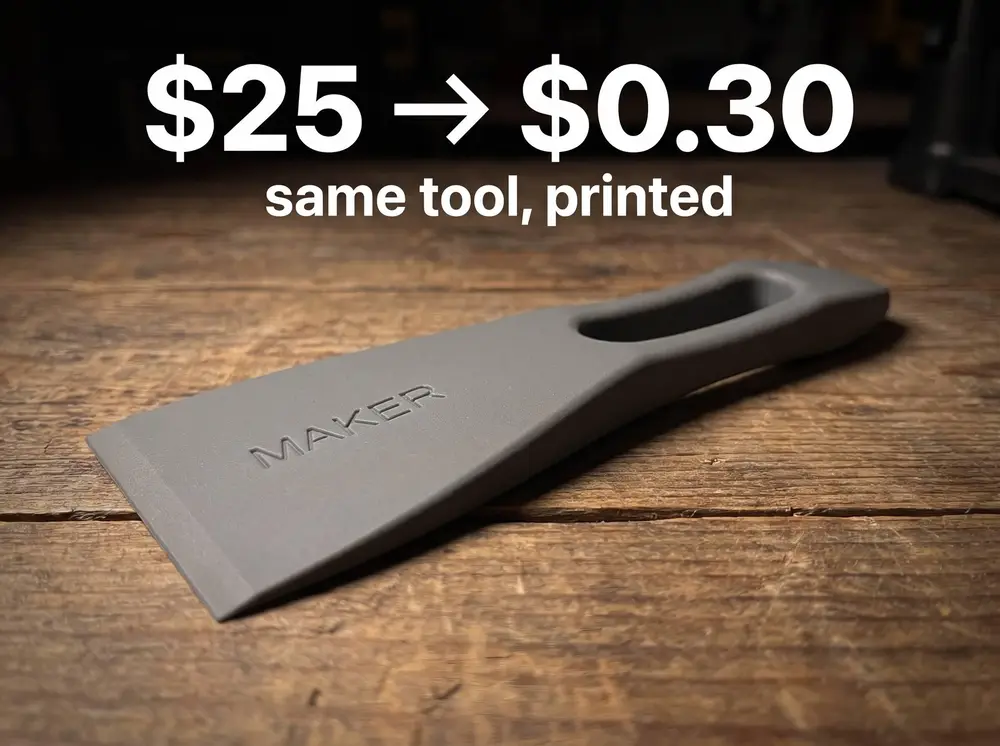
Bed Scraper for Makers | One Piece, Under 11 Grams


The tool you need before you need any other tool.
A minimal scraper for lifting prints off the plate. One piece, no supports, no hardware, and it prints in about half an hour. It will cost about $0.30!
The edge comes from your printer
The blade tapers to 0.50 mm at the tip, which is two or three layers. That leading edge is formed by the very first layer, squashed flat against the build plate, so it is the flattest and cleanest surface your machine can make. The design simply gets out of the way.
Printed flat on purpose
The whole part prints in one orientation, flat side down. That is not convenience, it is why the blade survives. Printed this way the pushing force runs along the layers instead of peeling them apart. Scrapers printed on edge split at the tip the first time you lean on them.
The blade is solid. There are no holes in the part that does the work. All the lightening is in the handle, where stiffness does not matter, and the opening there doubles as a hanger.
Print it in PETG
Not the usual advice, and here is the reason: you use a scraper on a plate that is still warm. PLA softens around 60 degrees, which is exactly your bed temperature, and the edge rolls over. PETG holds to about 80. PLA works if you let the plate cool first.
For maximum blade strength, run the nozzle at the top of the PETG range, around 255 to 260, and drop the fan to about a third. Layer adhesion is what breaks first, and nozzle temperature is the single biggest lever on it.
Settings
Layer 0.20 mm, 4 walls, 15 percent infill, no supports, flat as supplied. A stronger profile is included: 0.16 mm layers and 6 walls, which makes the blade effectively solid.